All it takes is a peek under the market��s hood to see several warning signs cropping up for stocks.
Specifically, three measures of breadth, including the number of stocks advancing relative to the number declining �� a way to take the market��s temperature �� have been experiencing some meaningful cracks recently.
We��ve all heard about how a small number of high-flying stocks have accounted for most of the market��s gains this year, but in fact the NYSE cumulative advance/decline line had actually been rallying quite nicely along with the market for most of the year. Although the so-called FAANG stocks and a few other large-cap momentum names have played a big role in the rally, the advance has not been as ��narrow�� as many have tried to portray �� until now.
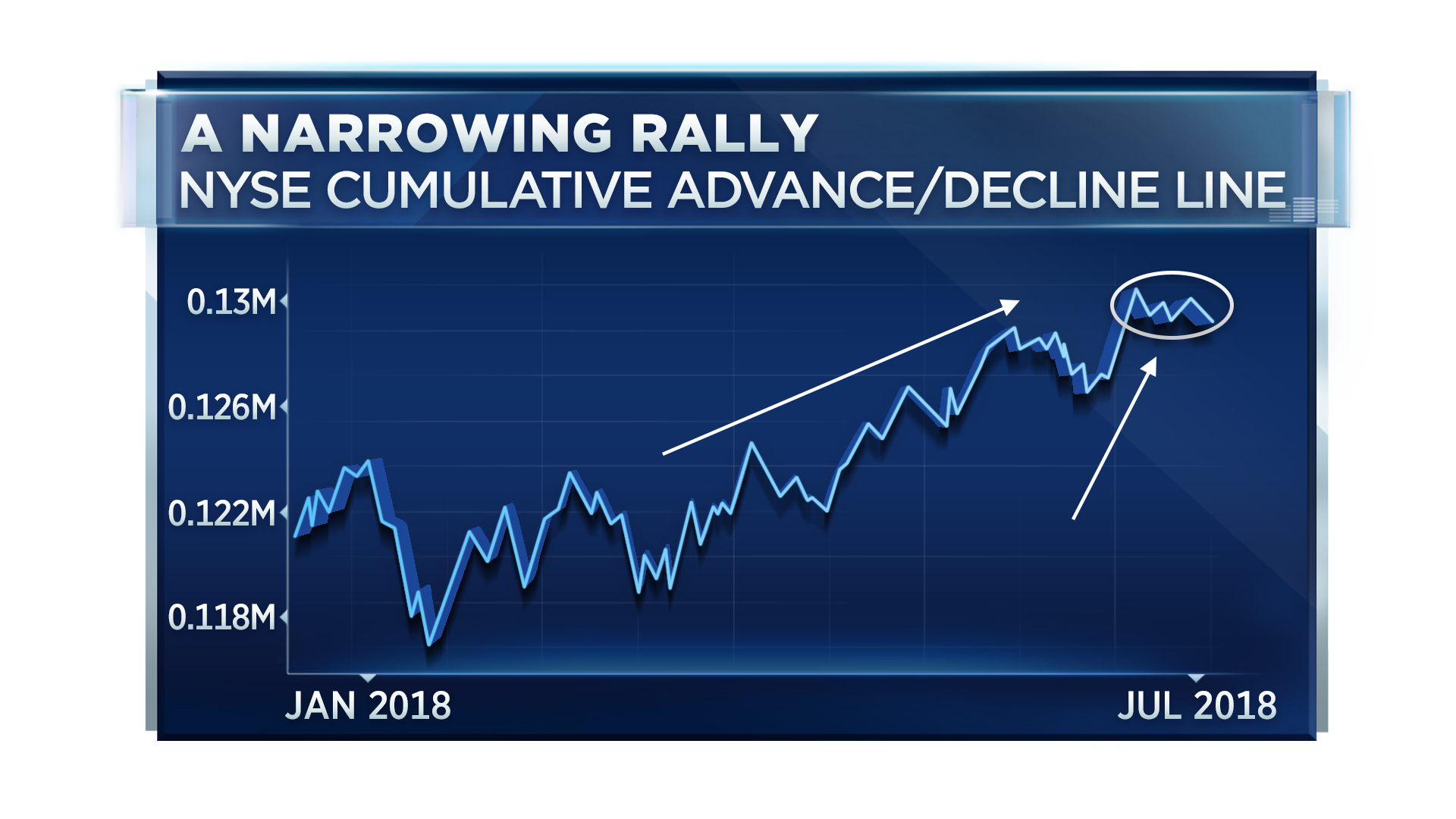 The action in the advancers vs. decliners in the S&P 500 has been was disappointing. Despite a 13-point rally in the S&P 500 on Tuesday, the number of advancers was actually lower than the decliners in the S&P and the broader NYSE Composite Index. So there's no question that the most recent advance in the stock market is being fueled by fewer and fewer names.
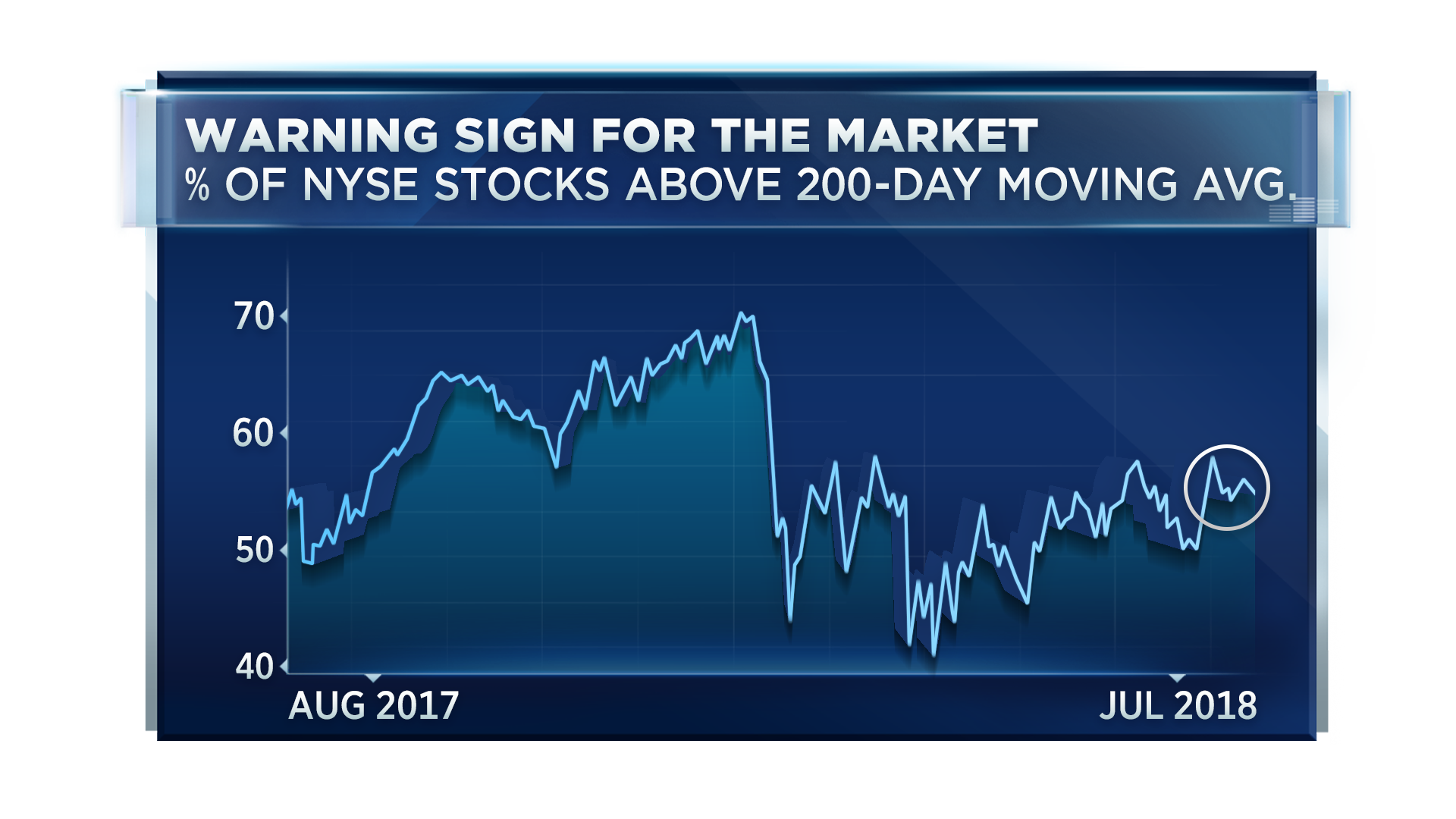
Then, there��s the percentage of stocks trading above their 200-day moving averages. That measure is rolling over, and stands well below where it was during the January highs.
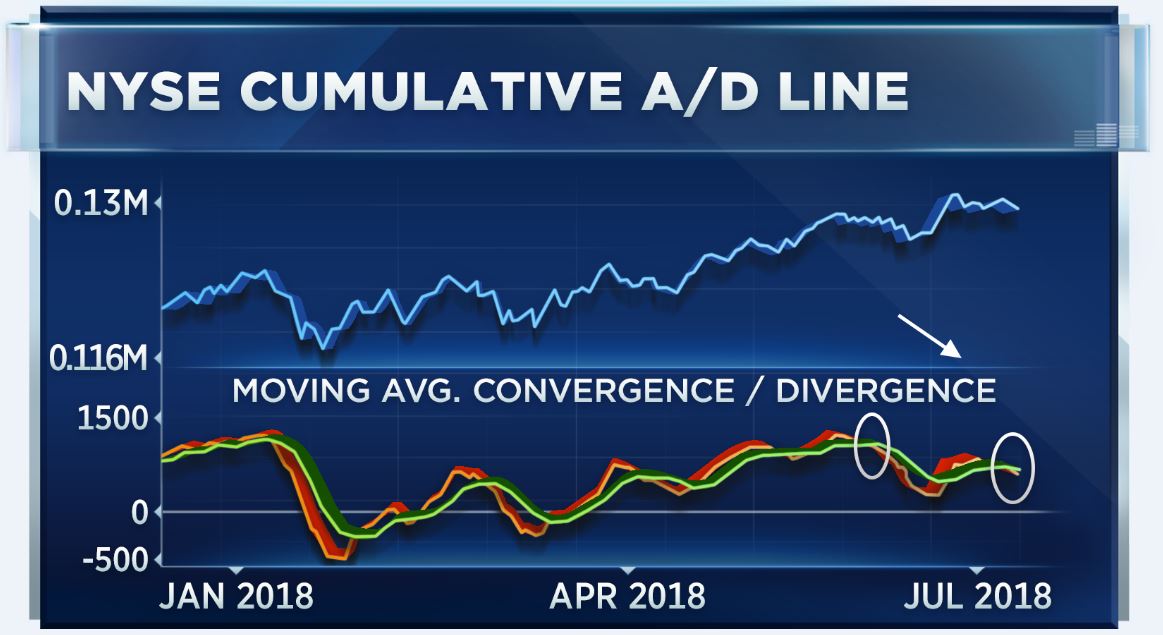
 Finally, the moving average convergence-divergence indicator on the NYSE advance/decline line is seeing a negative cross at a lower level than it did in June. In other words, ��lower lows�� are never good on a chart.
 What do all of these indicators add up to? Consider this. When a rally in the stock market becomes narrower, it is usually a sign that the rally is running out of gas. No, it does not mean that the nine-year bull market is about to crash to an end, but it is probably telling us that the stock market should be due to see a pullback soon.
Therefore, continued breadth deterioration would be a sign investors should consider becoming a little less aggressive right now �� and look to buy on any dips, rather than chase the market at current levels.
Vote Vote to see results Total Votes:Not a Scientific Survey. Results may not total 100% due to rounding.
Disclaimer
No comments:
Post a Comment